Gold Panning in Bathurst: A Family Guide
The Direct Answer
You can try gold panning near Bathurst two ways: a guided session at Bathurst Goldfields, a heritage site with a sluice already set up and staff to show you what to do, or independent fossicking in real rivers like the Turon, north of town, where you bring your own pan and knowledge. Both suit families. The heritage site works well for younger children who want a short, supervised go at finding colour, while river fossicking suits older kids and adults happy to stand in cold water for a longer search. Either way, keep expectations realistic — you're looking for flecks, not nuggets.
Guided Panning at a Heritage Site
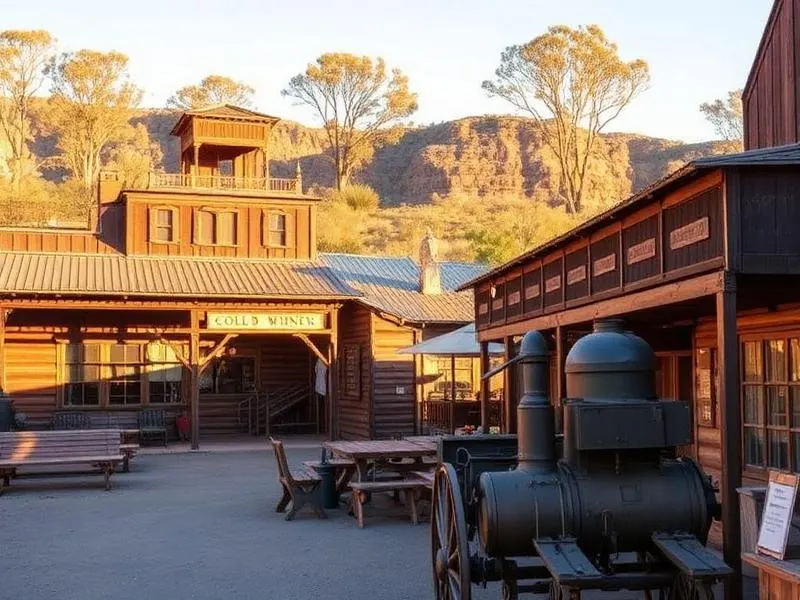
The gold panning Bathurst Goldfields offers is built for visitors rather than serious fossickers. A trough or sluice is loaded with material, an instructor explains how to swirl the pan so lighter sediment washes out and gold settles at the bottom, and you work your own tray at your own pace. It's a controlled, low-risk introduction to a skill that otherwise takes practice on a real riverbank, and the wider site also recreates aspects of an 1850s mining camp, so a visit usually combines panning with a look at how diggers lived during the rush.
Fossicking the Turon and Around Sofala
The alternative is doing it yourself in the rivers where Bathurst's gold rush actually played out. The Turon River, and the historic township of Sofala on its banks, sit among the genuine goldfields north of Bathurst. There's no instructor and no pre-loaded trough — just a riverbed, a pan, and whatever technique you've taught yourself. It rewards patience and suits people who enjoy the process as much as the result.
What a Panning Session Is Actually Like
Whichever version you choose, the technique is the same. You scoop gravel and sediment into a shallow pan, submerge it, and rotate and tilt it under water so the lighter material washes over the lip while gold — much denser than sand or clay — sinks toward the bottom. It takes a few tries to get the wrist motion right, and most people's first pan or two comes up empty. At a heritage site, staff correct your technique as you go; in a river, you're working it out alone, which some people find more absorbing precisely because there's no shortcut.
Nobody should go in expecting a meaningful amount of gold. What people typically find, when they find anything, are tiny flecks or specks — visible and satisfying, but not the stuff of retirement plans. Treat it as a hands-on history lesson with a small chance of a genuine find.
Will Kids Actually Enjoy This?
Mostly, with caveats around age. Younger children tend to lose patience fast if there's no result within the first few tries, which is why the guided version — with material already loaded into the trough — suits the under-eight crowd better than a raw riverbank. Primary-school-aged children generally do well with a short, supervised session where an adult helps with the swirling motion.
Independent river fossicking asks more of a child: patience, tolerance for cold water, and the ability to follow a technique without constant correction. It suits tweens and teenagers better, especially those who've already tried the heritage version first. For a family with a wide age range, the guided session together plus the river for older kids is a sensible split. Our family guide to Bathurst has more on what works with children in tow.
What to Bring and Wear
For a heritage site visit, dress as you would for any outdoor family activity — closed shoes, a hat, and clothes you don't mind getting damp. For independent river fossicking, pack more deliberately:
Check the weather first. The Turon and similar creeks run high and cold after rain, and a swollen river is no place to introduce children to fossicking.
Licence Rules and Landholder Permission
This is the part people skip and shouldn't. Fossicking on Crown land in NSW generally requires a Fossicking Licence from the NSW Government, covering activities like panning for gold in designated fossicking districts. If the riverbank or paddock is private property, a licence isn't enough on its own — you also need the landholder's permission before you set foot on it. Casual hobby panning still sits inside a real regulatory framework, and skipping the paperwork risks a fine and a bad relationship with a local landholder.
A guided heritage session sidesteps this entirely, since the operator has already sorted the legal side. For the DIY river version, check current licence requirements and confirm which stretches of the Turon are Crown land before you turn up with a pan and a car full of kids.
The History Behind the Activity
Bathurst's identity as Australia's oldest inland city is bound up with 1851, when Australia's first payable gold was found at Ophir, not far from town. That discovery triggered the Australian gold rush, pulling prospectors into the Central Tablelands almost overnight. It reshaped the region permanently — it's why villages like Sofala still stand, why the Turon has fossicking history rather than just scenery, and why panning today carries real weight rather than being an invented novelty.
Pairing a Gold Panning Day With Other Sites
A morning at a heritage panning site pairs naturally with a broader day trip. Driving north to Sofala afterward puts you in a township that has barely changed its footprint since the 1850s, with the Turon running alongside it — worth a look even without a pan in hand. Families stretching the history angle over a full day sometimes add a stop at one of Bathurst's museums covering the region's colonial and mining past. Our Bathurst attractions guide maps out the rest of them.
Frequently Asked Questions
Do you need a licence to pan for gold in NSW?
On Crown land, yes — a Fossicking Licence from the NSW Government is generally required. On private land, you need the landholder's permission as well, regardless of whether you hold a licence.
Is gold panning near Bathurst suitable for young children?
It can be, particularly the guided version at a heritage site, where material is pre-loaded and an instructor manages the process. River fossicking asks for more patience and cold-water tolerance, so it suits older children better.
Do you actually find gold when panning near Bathurst?
Sometimes, in small quantities — tiny flecks or specks rather than nuggets. Treat any find as a bonus on a hands-on history experience, not the main goal of the day.
What's the difference between a heritage gold panning session and fossicking in a river?
A heritage session is guided, uses pre-loaded material, and needs no licence or preparation beyond turning up. River fossicking is self-directed and falls under NSW fossicking licence and landholder permission rules.
Where are the historic goldfields near Bathurst?
Ophir, northwest of Bathurst, is where Australia's first payable gold was found in 1851. The Turon River and the township of Sofala, both to the north, remain part of the region's goldfields today.